3 Nov 2026
Decoding Symbolism in Everyday Artifacts of Traditional Lifestyles

Traditional lifestyles across many regions incorporate everyday artifacts that carry layered meanings through their designs, materials, and uses, and observers note how these items often encode cultural values without requiring explicit explanation. Artifacts such as woven baskets, ceramic vessels, and patterned textiles serve practical functions while researchers have documented how their motifs communicate stories about kinship, environment, and social roles. Data from ethnographic studies indicate that communities in various continents maintain these practices, where a simple household object might reference seasonal cycles or ancestral narratives through its construction techniques.
Patterns in Textiles and Their Cultural References
Textile production in traditional settings frequently employs symbols that reflect local ecology and social structures, and those who've examined these items find that colors and shapes often correspond to specific events or relationships within the group. For instance, certain weaving communities use repeating geometric forms to denote agricultural cycles, while others incorporate figures that mark rites of passage, according to field records compiled by academic institutions. Studies from North American and Australian sources show that these patterns persist because they reinforce group identity during daily tasks like clothing production or shelter decoration, and the continuity appears in museum collections that date back several generations. What's interesting is how a single garment might combine multiple symbols to convey layered information about the wearer's status or lineage without verbal elaboration.
Household Tools and Their Embedded Meanings
Tools used in food preparation and storage reveal additional dimensions of symbolism when examined closely, and evidence from material culture analyses suggests that shapes, engravings, and even the choice of wood or clay can signify respect for natural resources. Researchers discovered that in parts of Asia and Africa, carved handles on utensils often include motifs representing fertility or protection, which integrate into routines like cooking or harvesting. Figures reveal that such designs appear consistently across family units, where the artifact becomes a teaching device passed between generations. One case involved pottery from South American regions where vessel forms mirror local topography, and this connection helps maintain awareness of environmental changes through repeated use in community settings.
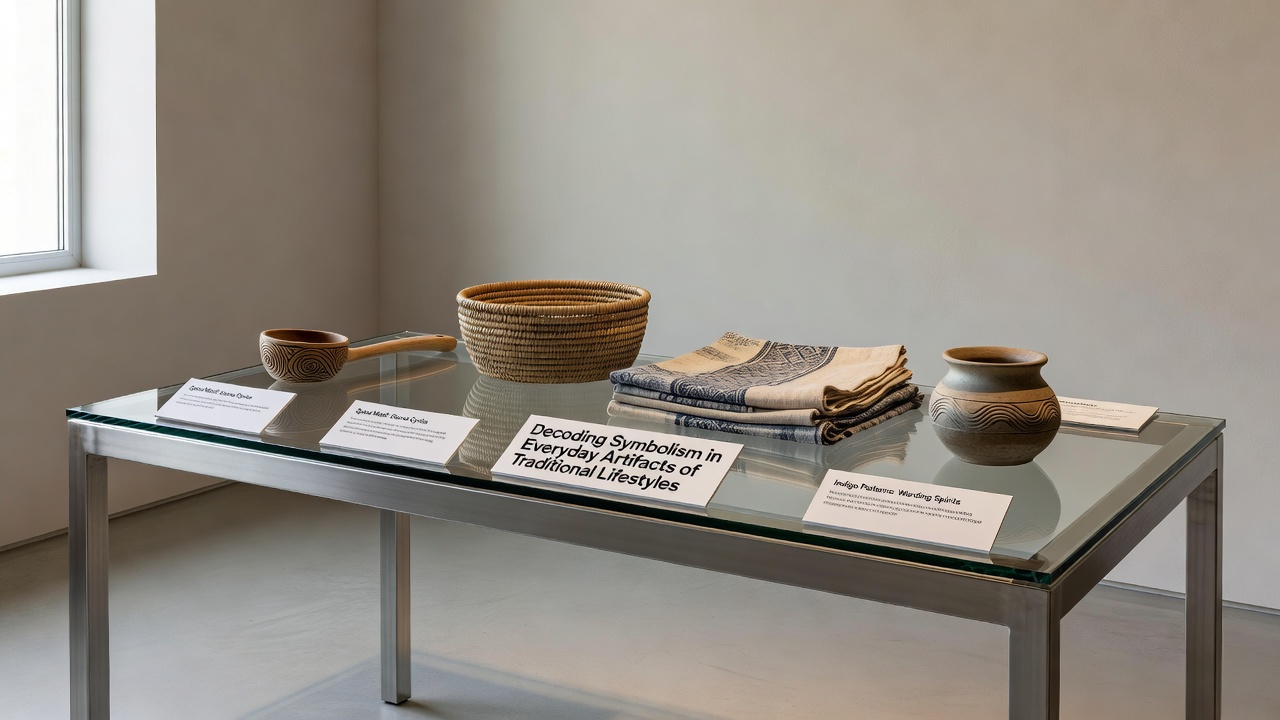
Further examination shows that basketry techniques in several Pacific and European traditional groups encode navigation or trade knowledge through knot patterns, and data indicates these methods transmit practical skills alongside historical accounts. Observers note that the durability of these items stems from both functional weaving and the cultural imperative to preserve the embedded references, which become evident during festivals or exchanges. Although modern production sometimes adapts these forms, core elements remain tied to original contexts, as documented in reports from institutions like the Smithsonian Institution.
Materials and Their Symbolic Associations
Selection of materials in artifact creation often ties directly to symbolic systems, and those studying resource management find that communities prioritize elements with dual practical and representational value. Clay from specific riverbeds might symbolize connection to ancestral lands, while plant fibers carry associations with growth cycles, according to investigations conducted by Canadian and New Zealand research teams. Evidence suggests this approach encourages sustainable harvesting because the symbolism reinforces long-term stewardship, and examples appear in ongoing practices where artisans explain material choices through oral histories rather than written texts. In November 2026, upcoming heritage workshops in multiple regions plan to highlight these material-symbol connections as part of broader documentation efforts supported by international cultural organizations.
Additional layers emerge when artifacts interact with daily rituals, such as lighting devices or storage containers that incorporate protective motifs, and reports from European academic centers confirm patterns that align with seasonal observances. The reality is that these symbols function as a form of non-verbal communication, allowing information to travel across time and space within the community. Yet the transmission depends on consistent use, which keeps the meanings active rather than archived.
Conclusion
Decoding symbolism in these artifacts requires attention to context, construction, and community knowledge, and comprehensive records from diverse geographic sources demonstrate how everyday items sustain cultural continuity. Patterns observed in textiles, tools, and materials collectively illustrate interconnected systems that blend utility with representation, and this integration supports the persistence of traditional lifestyles amid changing conditions. Further research continues to map these relationships through collaborative projects that prioritize source community perspectives.